Where Is the Water? A Field Note from the Backcountry
One of the first questions buyers ask when they fall in love with a piece of land out here — whether it's in Julian, Ramona, Alpine, or somewhere in between — is a simple one: where does the water come from?
It's a fair question, and honestly one of the most important ones you can ask. So here's a plain-language breakdown of how backcountry properties typically get their water.
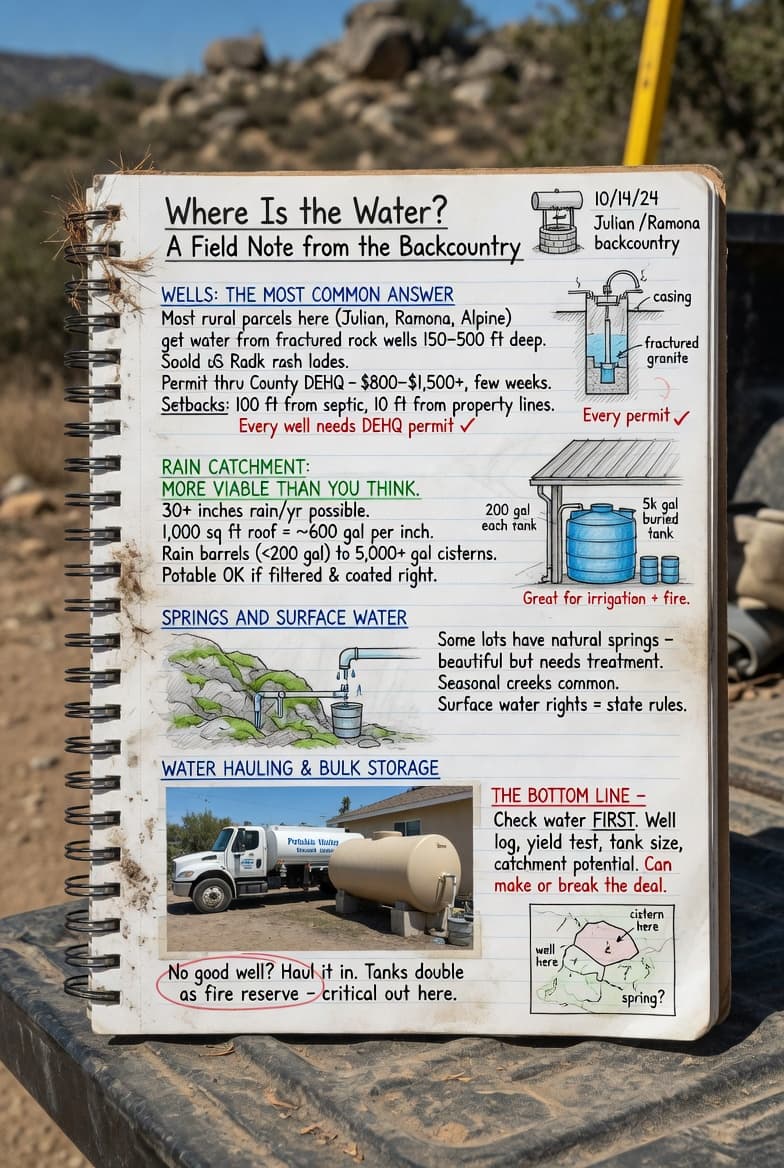
WELLS: THE MOST COMMON ANSWER
For most rural parcels in San Diego's mountain communities, groundwater is the primary source. Modern residential wells are drilled into fractured rock, often reaching anywhere from 150 to 500 feet depending on where you are. Every well requires a permit through San Diego County's Department of Environmental Health and Quality — expect the permitting process to run a few weeks and cost somewhere in the $800 to $1,500-plus range. Wells also have to meet strict setback requirements: at least 100 feet from a septic leach field and 10 feet from property lines, among others.
RAIN CATCHMENT: MORE VIABLE THAN YOU MIGHT THINK
The mountains up here can see 30 or more inches of rain in a good year. That makes catchment a legitimate supplement — especially for irrigation. A 1,000-square-foot roof can harvest roughly 600 gallons for every inch of rain that falls. Systems range from simple rain barrels under 200 gallons to full cisterns holding 5,000 gallons or more. California does allow potable rainwater systems, but they have to meet specific filtration and coating standards to qualify.
SPRINGS AND SURFACE WATER
Some properties have naturally occurring springs — a beautiful thing, but one that requires careful management to stay reliable and sanitary. Seasonal creeks and draws exist out here too, though using surface water beyond basic domestic needs typically moves into state water rights territory, which is a whole separate conversation.
WATER HAULING AND BULK STORAGE
Not every well hits a reliable vein, and not every property has one at all. In those cases, some backcountry residents haul bulk potable water and store it in large above-ground or buried tanks on site. It's a real solution — and those storage tanks pull double duty for fire protection too, which matters a lot out here.
THE BOTTOM LINE
Water is one of the due-diligence items we look at early in any backcountry transaction. Understanding what a property has — and what it might need — can make or break a deal. If you have questions about how to evaluate a rural parcel, we're happy to walk through it with you.
Starlene Bennin and Ashlyn Windsor Red Hawk Realty sempervets.com
#SemperVets #BackCountryLiving #SanDiegoRealEstate #RuralRealEstate #JulianCA #WellWater #OffGridLiving #LandBuyers