Out here, you don't connect to a city sewer. Every home from the cabins outside Julian to the ranches around Ramona runs its waste into a private septic system. When it works, you forget it exists. When it fails, you learn its full price fast.
The three documents we ask for early
Pump records. A healthy tank gets pumped every three to five years. If the seller can't produce a recent invoice, it's not a deal-breaker — it's a flag.
The county permit. San Diego County's Department of Environmental Health tracks every septic permit. We pull the history and look for the install date, any repair permits, and whether the system was engineered for a lot that didn't perc. Older homes — anything pre-1980s — sometimes still have cesspools, which are no longer legal and trigger a county-required upgrade at sale.
A separate septic certification. A standard home inspection does not cover the septic. We always recommend a specialist who pumps the tank, scopes the leach field, and certifies the system. In a buyer's market, sellers will often pay for it. In a seller's market, plan to pay yourself. Either way, get one.
What we watch for on the walk
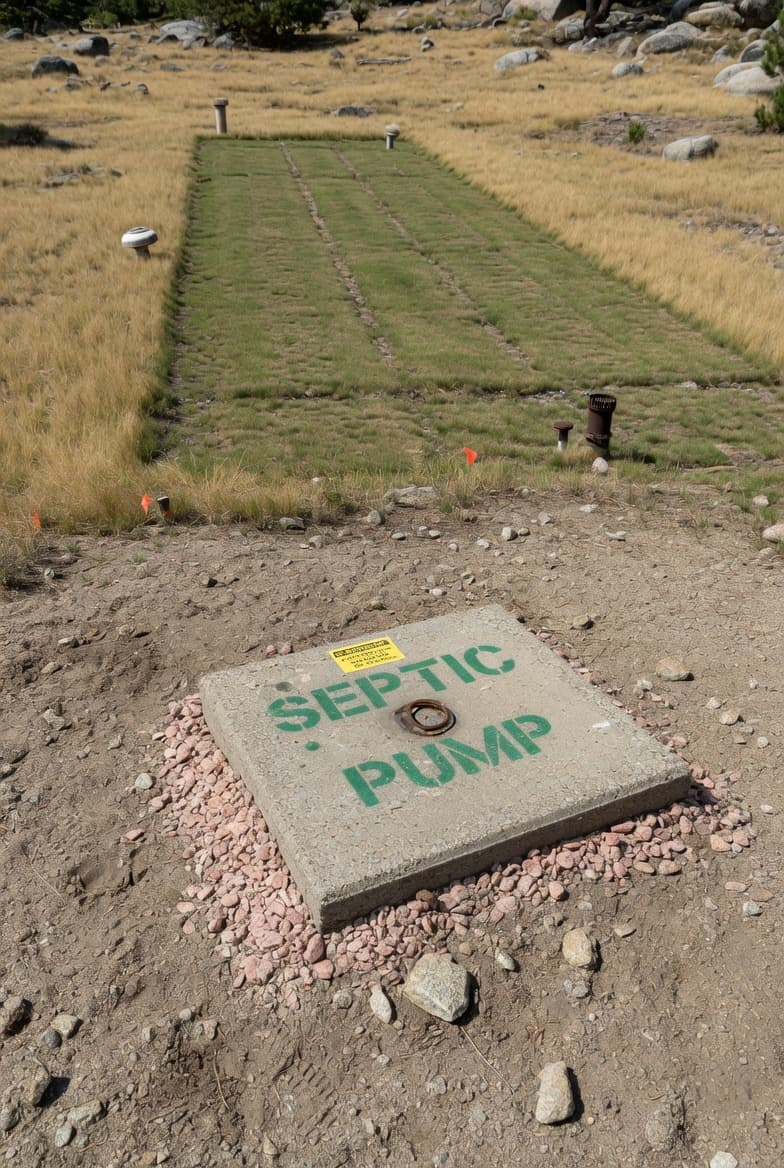
Soft spots or unusually green grass over the leach field. Slow drains in the house. Wet smells in dry weather. Any of these can mean the field is failing, and a new field on rocky, granite-heavy terrain can run into the tens of thousands.
The bottom line
A septic system isn't a reason to walk away from a backcountry home — it's a reason to know what you're stepping into. Ask for the pump records. Pull the county permit. Pay for the certification. Then make your offer with eyes open.
Questions about a specific property's septic? That's the kind of homework we do alongside our clients.